
Which Ethernet Cable Do You Need for Your Home?Cat 5e vs. Cat 6 vs. Cat 7 vs. Cat 8
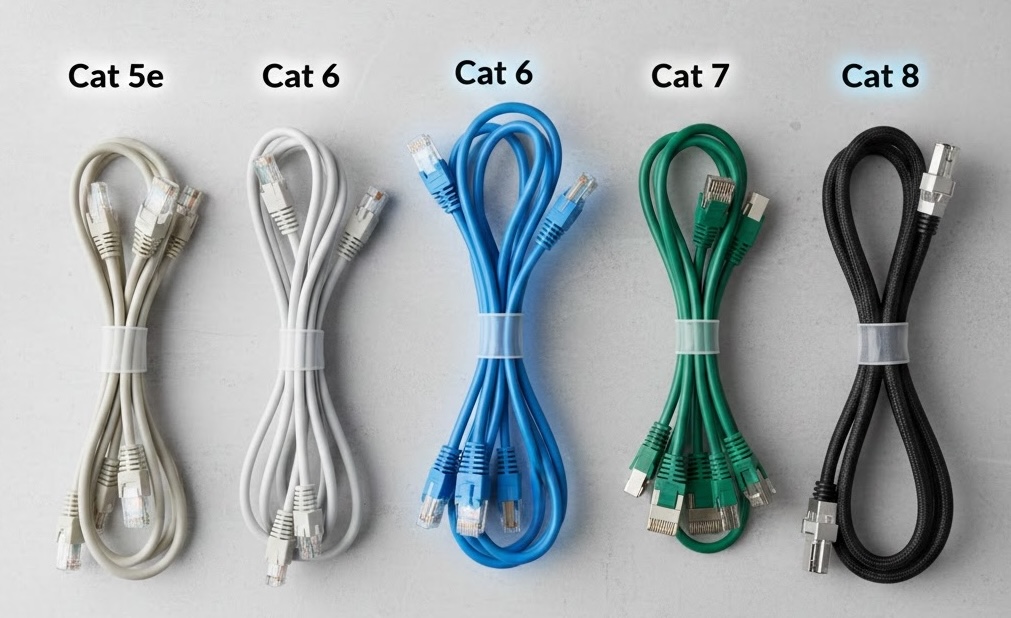
The modern home is more connected than ever. From 4K streaming and competitive online gaming to smart home devices, the demand for fast, reliable internet is constantly growing. But your internet speed isn’t just about your ISP—it’s also about the ethernet cables connecting your router, switches, and devices.
Walking into a store, you’ll see a dizzying array of options: Cat 5e, Cat 6, Cat 7, and Cat 8. Which one is right for your home?
Short Answer: For most homeowners today, a Cat 6 cable offers the perfect blend of performance, affordability, and future-proofing.
🔌 Understanding the “Cat” Classifications
“Cat” is short for Category. The number that follows (5, 6, 7, etc.) refers to the specification that the cable is built to meet, setting standards for signal-to-noise ratio, bandwidth, and resistance to crosstalk (signal interference). A higher number means a newer specification and generally better performance and higher bandwidth.
Here’s a breakdown of the most common cables you’ll encounter and their capabilities:
| Cable Category | Maximum Speed | Maximum Frequency (Bandwidth) | Ideal Use Case |
| Cat 5e | 1 Gigabit per second (Gbps) | 100 MHz | Basic home networks, older devices. |
| Cat 6 | 10 Gbps (up to 55m) | 250 MHz | Modern home networks, 4K streaming, gaming. |
| Cat 6A | 10 Gbps (up to 100m) | 500 MHz | High-end homes, small offices. |
| Cat 7 | 10 Gbps (up to 100m) | 600 MHz | High-security or high-interference commercial settings. Rarely necessary for home. |
| Cat 8 | 25/40 Gbps (up to 30m) | 2000 MHz | Data centers and enterprise environments. Overkill for home. |
🥇 The Contenders: A Homeowner’s Guide
1. Cat 5e: The Old Standard
- The Verdict: Acceptable, but fading.
- The Details: Cat 5e (Enhanced) is the minimum standard for modern networking. It can handle 1 Gbps (Gigabit Ethernet), which is sufficient for most internet plans in the U.S. and Canada. If you have older cables already running through your walls, they are likely Cat 5e. They will work, but they may limit the potential speed of modern devices.
2. Cat 6: The Sweet Spot for Today’s Home 🎯
- The Verdict: Highly Recommended.
- The Details: Cat 6 can handle up to 10 Gbps over short distances (up to 55 meters). More importantly, it supports a much higher frequency (250 MHz), making it more resistant to crosstalk and more reliable at high speeds than Cat 5e. Even if your current internet plan is only 500 Mbps, installing Cat 6 future-proofs your network for when 2 Gbps and 5 Gbps internet becomes the norm. It’s only marginally more expensive than Cat 5e.
3. Cat 7 and Cat 8: Commercial Grade & Overkill 🚧
- The Verdict: Unnecessary and often problematic.
- The Details:
- Cat 7 and Cat 8 were designed primarily for data centers and large enterprise applications. They offer superior shielding and much higher bandwidths, but they are expensive, often difficult to install due to their stiffness and thick shielding, and require special connectors (Cat 7 uses a non-standard connector).
- Crucially, no residential modem, router, or gaming console on the market today supports the 25 Gbps or 40 Gbps speeds of Cat 8. You would be paying a premium for performance you cannot use.
💡 Final Recommendation: Why Cat 6 Wins
When deciding which ethernet cable you need for your home, choose Cat 6.
- Future-Proofing: It can handle up to 10 Gbps, which is faster than almost any residential internet service currently offered. You won’t need to rewire your house for decades.
- Affordability: The price difference between Cat 5e and Cat 6 is negligible, making Cat 6 the best value for your money.
- Reliability: The tighter specifications and greater immunity to interference of Cat 6 ensure your connection stays stable and fast, especially for demanding activities like competitive gaming or large file transfers.
Pro-Tip: If you are wiring new construction or pulling cables over long runs (close to or over 55 meters), consider Cat 6A (Augmented) for guaranteed 10 Gbps across the full 100-meter limit.
For IT Consultations: Visit NorthBridge IT Services